
What is Industrial AI?
Industrial artificial intelligence (Industrial AI) is opening up new horizons for the manufacturing industry and Germany as a business location. It is the key to the next level of automation. It combines generative AI and AI agents with robotics, IoT, digital twins, and advanced analytics to make industrial processes self-learning, efficient, and resilient. Already today, one in three companies in Germany uses AI models in value creation. Especially in production-related environments, AI is considered the key to productivity, competitiveness, and innovation. The added value for Germany as an industrial location is considerable: higher efficiency, lower resource consumption, and new data-based business models. Industrial AI strengthens cooperation between industry, research, and technology providers and accelerates the transfer of innovations into practice.
Industrial AI will shape the industrial value creation of the future. This page shows how industrial AI can be used along the value chain in the future, which applications are already being implemented today, and which political and structural levers are necessary to establish Germany as a leading location for industrial AI.
A look at practical applications
Industrial AI optimizes value creation under real-world technical, regulatory, and organizational constraints. It connects data rooms and automation technology (OT) with IT systems and digital twins to create adaptive, partially autonomous processes. In manufacturing, there are applications for industrial AI across all industries and activities in the value chain.
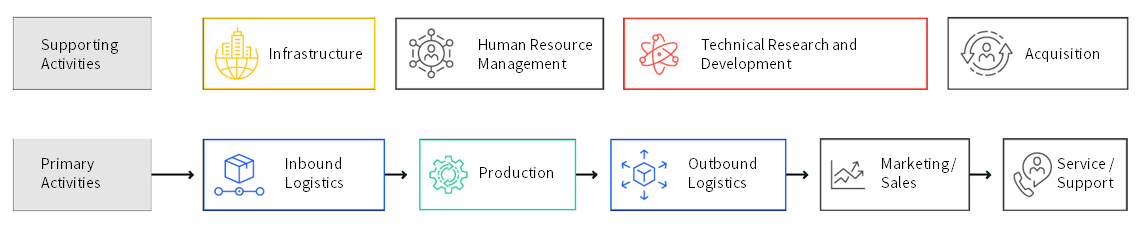
Research & Development
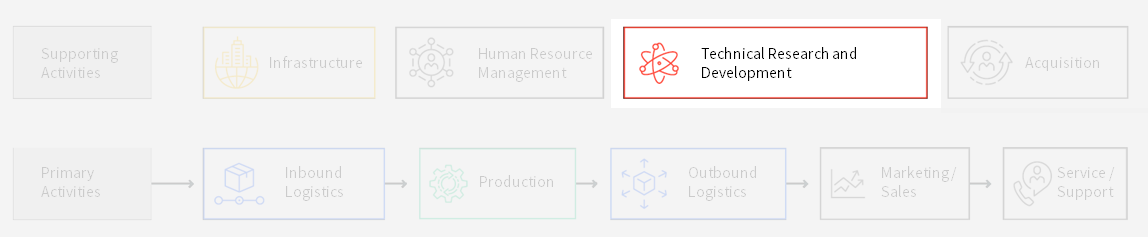
Research and development (R&D) and design are crucial activities in the industrial value chain, focused on creating new products and services and improving existing ones. They are often part of the “primary activity” of the technology sector, with R&D determining a company's innovative strength and design turning ideas into concrete, functioning products. By analyzing these steps, companies can identify areas where they can differentiate themselves from the competition and create added value for customers.
Use Cases
TOXPR – AI-supported prediction of the hazardousness of active substances
With TOXPR, Boehringer Ingelheim has developed an AI-based solution that automatically predicts the hazard classes of drug candidates, thereby significantly reducing animal testing. In pharmaceutical research, new substances must be toxicologically evaluated before use in the laboratory in order to determine appropriate occupational safety measures, such as respiratory masks or safety levels. Until now, these evaluations have mostly been carried out using animal testing, which is associated with high costs, long durations, and ethical challenges.
TOXPR uses machine learning to analyze chemical structures and accurately predict the acute oral toxicity of new active substances – without any animal testing. The system puts the 3R principles (“Replace, Reduce, Refine”) into practice and enables a quick, reliable assessment of the hazard class. This improves occupational safety in the laboratory and significantly accelerates the research process.
The use of TOXPR can avoid up to 40 external in vivo studies per year and save more than €200,000. In addition, the system strengthens ethical responsibility and sustainability in pharmaceutical research — an example of how industrial AI helps to balance innovation, safety, and social progress.
Company:
Boehringer Ingelheim, Pharmaceuticals
Data-driven modeling – AI-supported simulation for vehicle development
With data-driven modeling, divis intelligent solutions GmbH has developed an AI-based process that replaces classic simulation runs in vehicle development in near real time. While conventional forming simulations in the automotive industry require eight to twelve hours per calculation, the AutoML-trained prediction model delivers results without delay, enabling significantly faster evaluation of design drafts.
The solution was developed to make development processes in the automotive industry more efficient. The design and innovation of new models are under high time and cost pressure, as companies must adhere to ever shorter innovation cycles in global competition. By learning a prediction model from existing simulation data, divis can immediately predict the results of a forming simulation for new geometry parameters without having to perform complex physical simulations.
The results speak for themselves:
- The time required for simulation runs is completely eliminated.
- The prediction model is interactive and ready for immediate use.
- The solution is scalable to all development and production sites.
- The process not only accelerates development processes, but also significantly reduces costs and resource consumption. It demonstrates how industrial AI complements complex physical models with data-driven approaches
Furthermore, the project highlights the need to strengthen AI literacy in industrial policy, research, and education in order to systematically expand the existing know-how in Germany. Only through the practical application of modern AI methods such as deep learning, AutoML, or quantum machine learning can the competitiveness of industry be secured in the long term.
“We recommend that any industry partner for whom solving difficult optimization, modeling, and forecasting tasks is important should collaborate with Prof. Bäck.” — Markus Ganser, Standardization Manager, BMW
Company:
divis intelligent solutions GmbH, Automotive/Mobility
AI-based requirements management – faster product development at Continental
With support from NTT DATA, Continental has developed an AI-powered tool that automatically reads and analyzes complex specifications and assigns them to the appropriate development centers. This completely digitizes and standardizes a central process step in requirements management that was previously highly manual. The AI system recognizes requirements, evaluates their content, and distributes them to the appropriate departments – an approach that reduces effort by up to 80% and significantly accelerates product development.
In the past, the manual evaluation and assignment of extensive specifications took tens of thousands of working hours per project and led to significant delays in development. By using industrial AI, Continental has not only succeeded in automating this process, but also in improving its quality. The AI-supported analysis works faster, more accurately, and more consistently, reducing the workload on specialists and making more efficient use of resources.
The results speak for themselves:
- 80% less effort in requirements analysis
- 8-fold acceleration of processing time – minutes instead of days
- 37,500 working hours saved per development project
The project exemplifies how industrial AI strengthens the competitiveness of the European automotive industry, relieves skilled workers of repetitive tasks, and promotes digital sovereignty through automated knowledge work.
“AI makes our development faster, more precise, and more competitive.” — Philipp von Hirschheydt, Continental AG
Company:
Continental AG
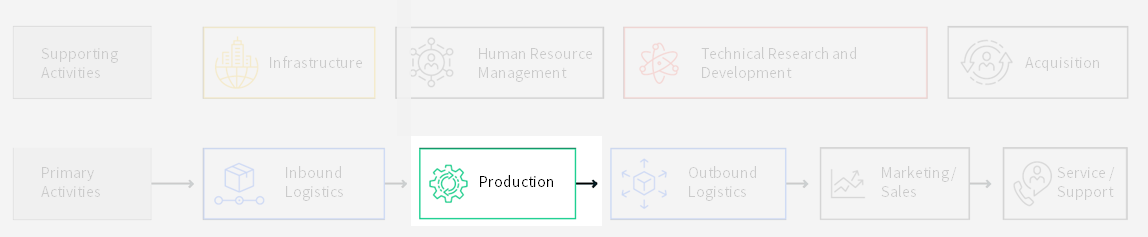
Production
Production is the core of the value chain, encompassing the transformation of raw materials and components into finished products through various production steps. It is a central process in which value is created, for example, by turning raw materials into end products through assembly, processing, and packaging using machines and skilled workers.
Use Cases
RepAIr Buddy
With RepAIr Buddy, ZF has developed an AI-based solution that significantly reduces unplanned machine downtime and noticeably increases productivity in maintenance. The application supports specialists in determining the causes of failures and suggests appropriate repair measures based on historical data and manufacturer information.
In many manufacturing companies, unplanned downtime leads to high costs and production losses. Causal analysis usually requires many years of experience and time-consuming research in ERP systems, logbooks, and documentation. This is where RepAIr Buddy comes in: A large language model (LLM) processes information from the ERP system, the machine logbook, the repair history, and the manufacturer's documents in real time to provide maintenance personnel with fact-based recommendations for action.
The results from the pilot plants speak for themselves:
- 10% shorter downtimes for unplanned machine failures
- Savings in the high six-figure range in the first year
- Breakdown of savings: approx. 60% productivity increase, 40% EBIT-effective hard savings
In addition, the solution actively contributes to overcoming the shortage of skilled workers: RepAIr Buddy facilitates the transfer of knowledge between experienced and new employees by systematically integrating experiential knowledge into the AI.
ZF sees RepAIr Buddy as a central component of a future-oriented maintenance strategy—dedicated funding programs already support the scaling of such AI solutions in the context of securing skilled workers and industrial resilience.
“RepAIr Buddy provides fact-based recommendations in real time and guides the user directly to the right action – turning data into measurable productivity.” — Employee, ZF Friedrichshafen
Company:
ZF Friedrichshafen, manufacturing industry
Visual Inspection – AI-supported visual quality control in production
With Visual Inspection, GFT Technologies has developed an AI-based solution that significantly reduces waste and energy consumption in production. The application enables real-time quality control during the ongoing manufacturing process and replaces time-consuming, manual visual inspections with an automated, adaptive system.
In many industrial companies, visual inspections have traditionally been a manual, error-prone task that ties highly qualified personnel to monotonous routines. Errors are often detected late, leading to unnecessary waste, rework, and high energy consumption. Visual Inspection addresses this problem by capturing each component with cameras during production. The underlying AI model is trained in the cloud and runs locally on the machine. It detects deviations in real time, classifies them automatically, and eliminates the need for manual final inspection.
The results are impressive:
- Error detection in seconds
- Implementation within three months at an automotive supplier
- Virtually error-free production (“zero-defect” standard) through AI-supported real-time inspection
AI-supported visual inspection identifies deviations in the production process in milliseconds before scrap or energy losses occur. It saves resources, increases production quality, and reduces the workload on skilled workers.
AI-powered visual inspection identifies deviations in the production process in milliseconds, before rejects or energy losses occur. It saves resources, increases production quality, and relieves skilled workers of repetitive inspection tasks – while also improving process stability. In this way, visual inspection helps to sustainably improve manufacturing efficiency, product quality, and sustainability in industrial production environments.
“With AI-supported visual inspection, our customers quickly achieve more stable quality with significantly less testing effort.” — Dr. Markus Müller, GFT Technologies
Company:
GFT Technologies, manufacturing industry
Reliable, resource-efficient production through AI
Fraunhofer IOSB has collaborated with Dieffenbacher GmbH to develop AI-based applications that fundamentally optimize the production of wood-based panels. Using sensor technology, real-time data analysis, and machine learning, anomalies in the process are identified and product quality is accurately predicted, enabling resource-efficient control of the production process.
In conventional production, time-delayed laboratory measurements often led to uncertainties in product quality. Quality deviations were only detected at a late stage, resulting in rejects or waste of raw materials. The aim of the project was to avoid these inefficiencies by means of an AI-based assistance system.
To this end, data from the plant's numerous sensors was collated and AI applications were developed for real-time prediction of product quality and anomaly detection. The system detects deviations and impending problems before they cause downtime.
The results are clearly measurable:
- Up to five hours less downtime per month
- Savings of up to €1.5 million per year
- Increase in output of up to 1.5%
The solution demonstrates how AI can significantly improve production quality and reduce resource consumption. AI applications such as these relieve skilled workers of repetitive tasks, compensate for the shortage of skilled labor, and help to strengthen the security of supply and competitiveness of the industry.
At the same time, the project highlights the need for political framework conditions that facilitate access to AI innovations, particularly for SMEs. Targeted support programs and shared data pools are needed to enable the cross-industry exchange of production data—beyond the previous one-up-one-down limitation in supply chains.
Companies:
Fraunhofer Institute for Optronics, System Technologies, and Image Exploitation (IOSB), manufacturing industry
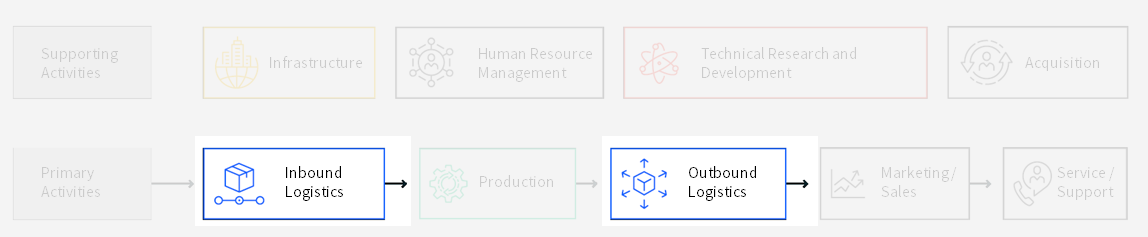
Logistics
In the value chain, logistics refers to the planning, control, and execution of all processes related to the flow of goods and information in order to bring a product from raw material to end customer. It encompasses procurement, production, distribution, and disposal logistics and is crucial for efficiency, cost control, and customer satisfaction.
Use Cases
Intelligent supply chain monitoring – transparency and resilience through AI
Intelligent supply chain monitoring is an AI-based solution that enables end-to-end transparency across the entire supply chain – from procurement and inbound logistics to production and warehousing to shipping logistics and customer orders. The aim is to break down data silos, bring together information from internal and external sources in real time, and identify deviations at an early stage.
The solution uses AI-supported applications to automatically collect and filter relevant data along the supply chain and make it available in a central dashboard. This enables employees to immediately identify and counteract deviations between delivery commitments, production capacities, inventory levels, and customer orders. The system continuously compares correlations and anomalies and supports operational planning with real-time information – without time-consuming manual analyses.
The results show a significant gain in efficiency:
- Information is available in real time and in context, eliminating the need to search for data relevant to decision-making.
- At the same time, risks and disruptions in local, regional, or global supply chains can be identified at an early stage and appropriate measures taken.
Intelligent supply chain monitoring strengthens the resilience of industrial value networks and helps to secure supply. By providing an early overview of supply bottlenecks, capacity deviations, and production risks, companies can respond flexibly and ensure the stability of complex supply chains—an important contribution to the competitiveness and sustainability of Germany as an industrial location.
Company:
IBM
Infrastructure
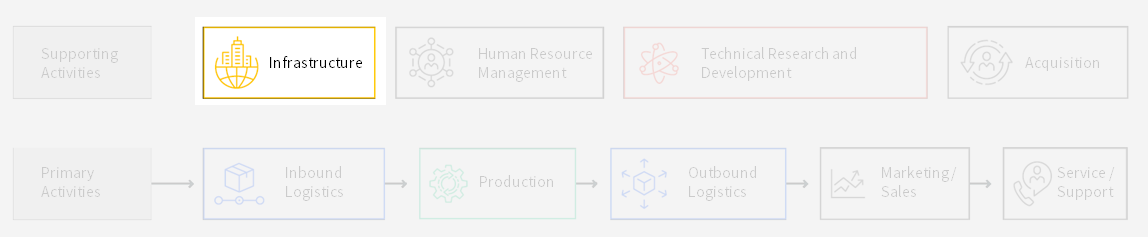
In the value chain, infrastructure is the fundamental framework of physical and digital systems that are essential for economic processes to function. It encompasses both the physical level (e.g., roads, energy supply networks) and the digital level (e.g., data lines, servers) and is therefore crucial for the efficient handling of all activities within the value chain, from procurement to the end consumer.
Use Cases
Humanoid robots for the German economy
With the establishment of the European Industrials AI Innovation Hub in Stuttgart, EY has created a scalable robotics platform that taps into the potential of humanoid robots for industry. The aim is to increase productivity, reduce costs, and enable new forms of industrial collaboration through AI-supported automation and flexible service models.
Traditional, labor-intensive service models are increasingly reaching their limits: skills shortages, rising costs, and growing pressure to improve efficiency are threatening existing structures. Companies therefore need flexible and scalable automation solutions to remain competitive. EY is addressing this challenge with the concept of an orchestrated Virtual AI Factory, where companies, start-ups, and research institutions can jointly develop, simulate, and validate AI-based robotics solutions.
The platform forms the basis for a Robotics-as-a-Service model that enables rapid scaling and flexible integration of new use cases. This makes AI-based robotics systems economically viable not only for large companies, but also for medium-sized businesses.
The expected effects are significant:
- >50% lower operating costs per service unit
- Margin increase of 10–15% to up to 50% through platform operation
- Scaling to over 20 use cases, Europe-wide application planned
The solution strengthens the competitiveness of European industry, creates new fields of work, and promotes sustainable production through resource efficiency and flexible automation. At the same time, it increases security of supply by making production capacities more resilient and digitally connected.
“With Robotics-as-a-Service, we are shaping the future of industry in a flexible, efficient, and sustainable way.” — Oliver Meier-Kunzfeld, Partner, EY Consulting
Company:
Ernst & Young, Manufacturing Industry
Digital infrastructure for industrial AI – Edge Compute & AI Platform
With the Nokia Edge Compute and AI Platform, Nokia provides a scalable infrastructure that accelerates the deployment of AI in industrial production environments. The solution links private 4G/5G networks (Nokia Digital Automation Cloud) with on-premises edge computing (MX Industrial Edge, MX Grid, Data Lake) and an extensive portfolio of industrial applications. The aim is to make AI available where data is generated – directly at the machine, at the edge, or in the factory.
The platform addresses two key challenges of industrial AI: firstly, the efficient collection, transfer, and training of large amounts of data; and secondly, the provision of real-time inference models close to the data source in order to minimize latency and enable immediate decisions. Orchestrated edge and cloud resources ensure that operational data is processed securely and AI models can respond intelligently on site.
The Nokia Digital Automation Cloud (DAC) forms the backbone for secure, deterministic communication. The Industrial Devices portfolio connects machines, sensors, and people in a protected network. This is complemented by the Industrial Application portfolio, which runs on the edge infrastructure and provides AI-based solutions for visual quality control, occupational safety, video-based situation recognition, and augmented reality in maintenance and training.
At the Digital Creativity Lab (DCL) in Munich, industry partners and research institutions can test applications, simulate data flows, and develop their own AI scenarios. Nokia's partner ecosystem thus enables rapid integration and scaling of new industrial AI applications.
Companies:
Nokia, manufacturing industry
Source: Industrial AI: The Future of Manufacturing |Bitkom e. V.


